
2026-07-17
Best Doctor & Surgeon for Piles and Fistula in Mumbra, Thane: Advanced Laser Treatment Guide
Piles and fistula are common anorectal conditions that can significantly affect your quality of life if left untreated. Fortunately, advances in laser surgery have made treatment safer and less painful. Read this guide to symptoms, recovery, and how to choose the best specialist in Mumbra, Thane.
Piles and fistula are common anorectal conditions that can significantly affect your quality of life if left untreated. Persistent pain, bleeding, swelling, or discharge should never be ignored. Fortunately, advances in laser surgery have made treatment safer, less painful, and associated with faster recovery than many traditional surgical approaches.
If you're searching for the best doctor and surgeon for piles and fistula in Mumbra, Thane, this guide explains the symptoms, treatment options, benefits of laser surgery, and what to look for when choosing a qualified specialist.
Understanding Piles (Hemorrhoids)
Piles, also called hemorrhoids, are swollen veins in or around the anus and lower rectum. They may develop due to increased pressure in the rectal area and can affect people of all ages.
Common Symptoms of Piles
- Bleeding during bowel movements (typically bright red blood).
- Severe pain, itching, or swelling around the anus.
- Discomfort while sitting or walking.
- A soft lump near the anus which may be tender to the touch.
Early diagnosis often allows for more effective treatment and helps prevent complications.
What Is an Anal Fistula?
An anal fistula is a small, infected tunnel that develops between the inside of the anal canal and the skin around the anus. It is usually the result of a previous anal abscess that failed to heal completely.
Common Symptoms of Fistula
- Persistent pain, swelling, and redness around the anal region.
- Recurring pus or foul-smelling bloody discharge from a small opening.
- Irritation and skin inflammation around the anus due to constant drainage.
- Occasional fever or chills due to recurrent infections.
A fistula rarely heals on its own and generally requires evaluation by an experienced surgeon.
Why Early Treatment Is Important
Ignoring piles or fistula can lead to:
- Chronic pain and recurrent anal abscesses.
- Persistent bleeding leading to anemia.
- Difficulty sitting or walking comfortably.
- Reduced quality of life and social discomfort.
- More complex surgery if the condition worsens.
Seeking timely medical advice from the best doctor for piles improves the chances of effective treatment and recovery.
Laser Treatment for Piles and Fistula
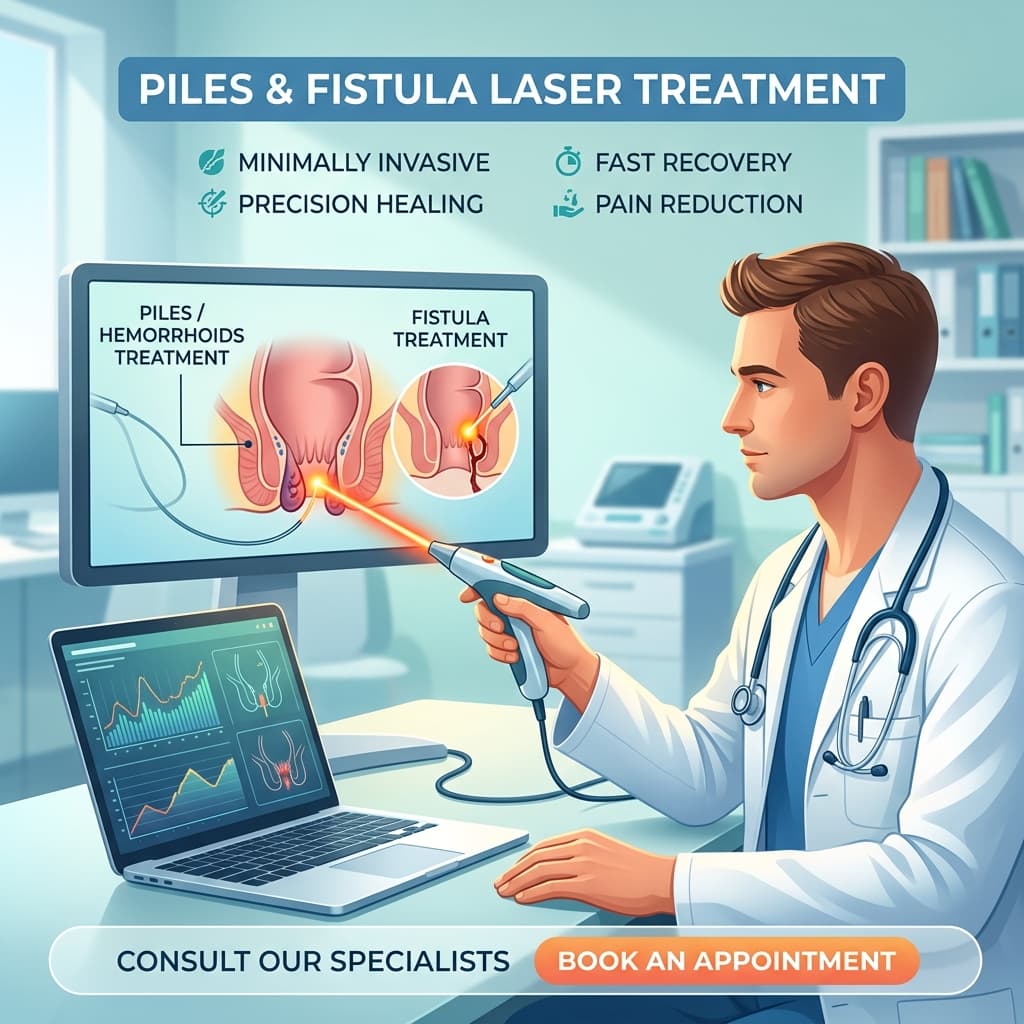
Modern laser surgery has transformed the management of many anorectal conditions. Depending on your diagnosis and overall health, your surgeon may recommend laser treatment as an appropriate option.
Potential benefits of laser procedures (Laser Hemorrhoidoplasty and Fistula Laser Closure) may include:
- Smaller wounds and no painful dressings.
- Reduced bleeding during and after the procedure.
- Less post-operative pain and discomfort.
- Shorter hospital stay (same-day discharge).
- Faster return to normal activities (usually 2-3 days).
- Minimal scarring and preservation of sphincter muscles.
Not every patient is a candidate for laser surgery, so treatment should always be based on an individual evaluation.
Signs You Should Consult a Surgeon
Book an appointment if you experience:
- Bleeding from the rectum.
- Severe pain during bowel movements.
- A lump around the anus.
- Persistent itching or recurrent swelling.
- Pus discharge or repeated anal abscesses.
- Ongoing constipation with bleeding.
Prompt assessment can help determine the cause and the most appropriate treatment.
How to Choose the Best Doctor and Surgeon for Piles and Fistula in Mumbra, Thane
When selecting a specialist, consider the following:
Experience
Choose a surgeon in Mumbra, Thane with experience in treating anorectal disorders and performing modern minimally invasive laser procedures.
Accurate Diagnosis
A thorough clinical examination is essential because not all anorectal symptoms are caused by piles. Conditions such as fissures, fistulas, infections, or inflammatory bowel disease may present similarly.
Modern Treatment Options
A well-equipped surgical centre may offer Laser Surgery, Minimally Invasive Procedures, Advanced Diagnostic Evaluation, and Comprehensive Post-operative Care.
Patient Education
A good piles surgeon in Mumbra, Thane explains your diagnosis, treatment options, benefits and risks, recovery expectations, and lifestyle modifications after treatment.
Common Causes of Piles
Several factors may increase the risk of developing hemorrhoids, including:
- Chronic constipation or straining during bowel movements.
- Prolonged sitting (especially on the toilet).
- Pregnancy, obesity, or a low-fiber diet.
- Heavy lifting or a family history of hemorrhoids.
Preventing Piles
Simple measures can help lower your risk:
- Eat a fiber-rich diet and drink adequate water.
- Exercise regularly and avoid prolonged sitting.
- Do not delay bowel movements or strain excessively.
Recovery After Treatment
Recovery varies depending on the type of procedure and individual health. Patients are often advised to stay hydrated, consume a high-fiber diet, take prescribed medications, keep the area clean, and avoid heavy lifting.
Frequently Asked Questions
Is laser treatment painful?
Many patients experience less post-operative discomfort compared with conventional surgery, although individual experiences vary.
Can piles return after surgery?
Recurrence is possible, especially if contributing factors such as constipation or straining continue. Healthy lifestyle habits can help reduce the risk.
Does a fistula heal without surgery?
Most anal fistulas require surgical management. A specialist can recommend the most suitable treatment based on the fistula's characteristics.
How long does recovery take?
Recovery depends on the procedure performed, the severity of the condition, and individual health. Your surgeon will provide personalized guidance.
Looking for Expert Surgical Care in Mumbra, Thane?
If you are searching for the best piles surgeon in Mumbra, Thane, choosing a specialist experienced in minimally invasive and laser techniques can help ensure an accurate diagnosis, personalized treatment plan, and comprehensive post-operative care.
For more information about advanced surgical treatments, patient education, and consultation details, visit drqasimkhan.com.
Conclusion
Piles and anal fistula are treatable conditions, and early medical evaluation can prevent unnecessary discomfort and complications. Advances in laser and minimally invasive surgery have improved treatment options for many patients.
If you are experiencing symptoms such as bleeding, pain, swelling, or discharge, consult a qualified surgeon for an appropriate evaluation. Timely diagnosis and evidence-based treatment can help you return to your normal routine with greater comfort and confidence.
Related Topics
Explore the key topics covered in this article.
Patient Consultation & Surgical Care Service Areas
Dr. Qasim Khan provides advanced laparoscopic, endoscopic, laser, and general surgical consulting across these regions: